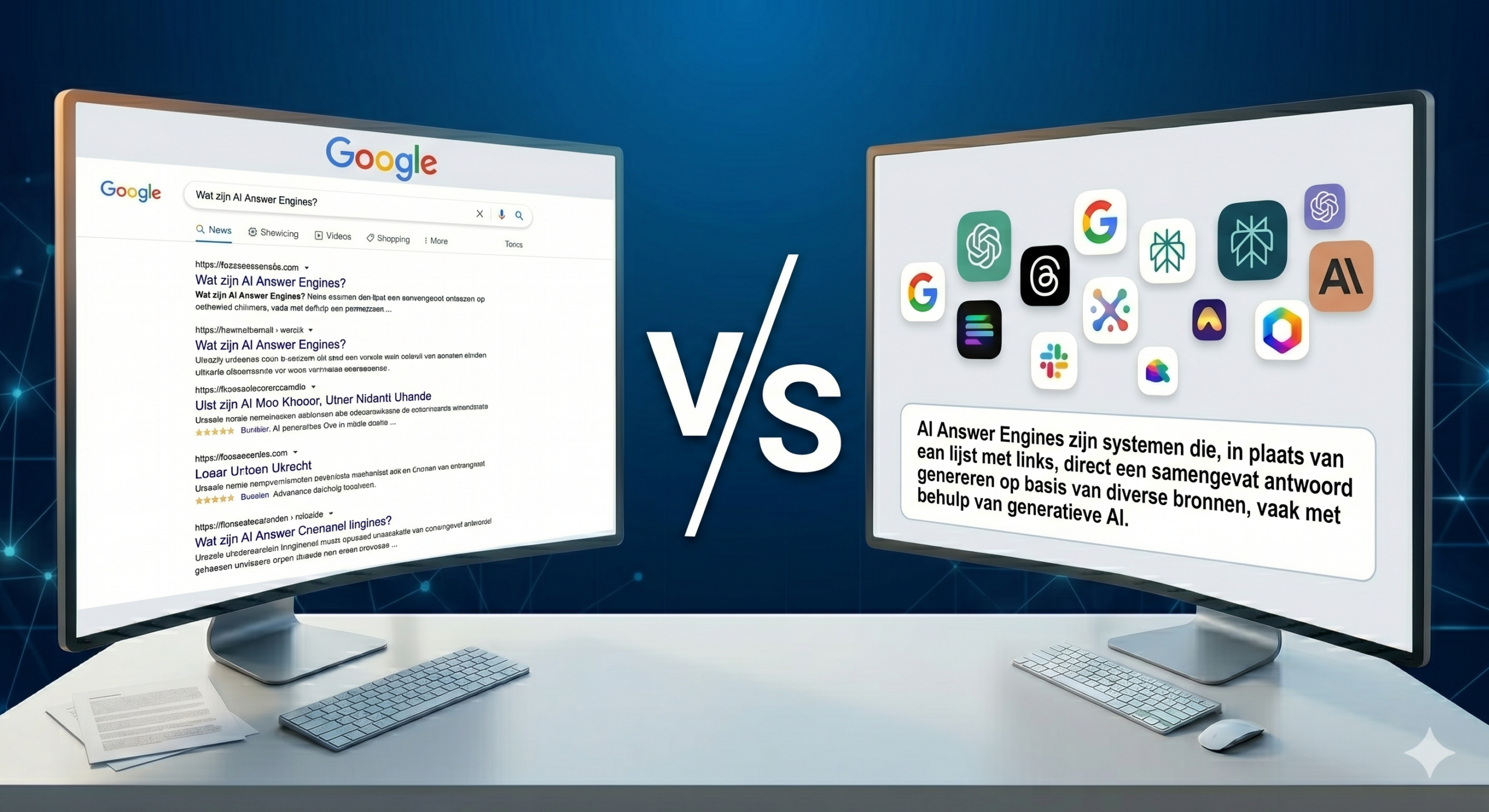
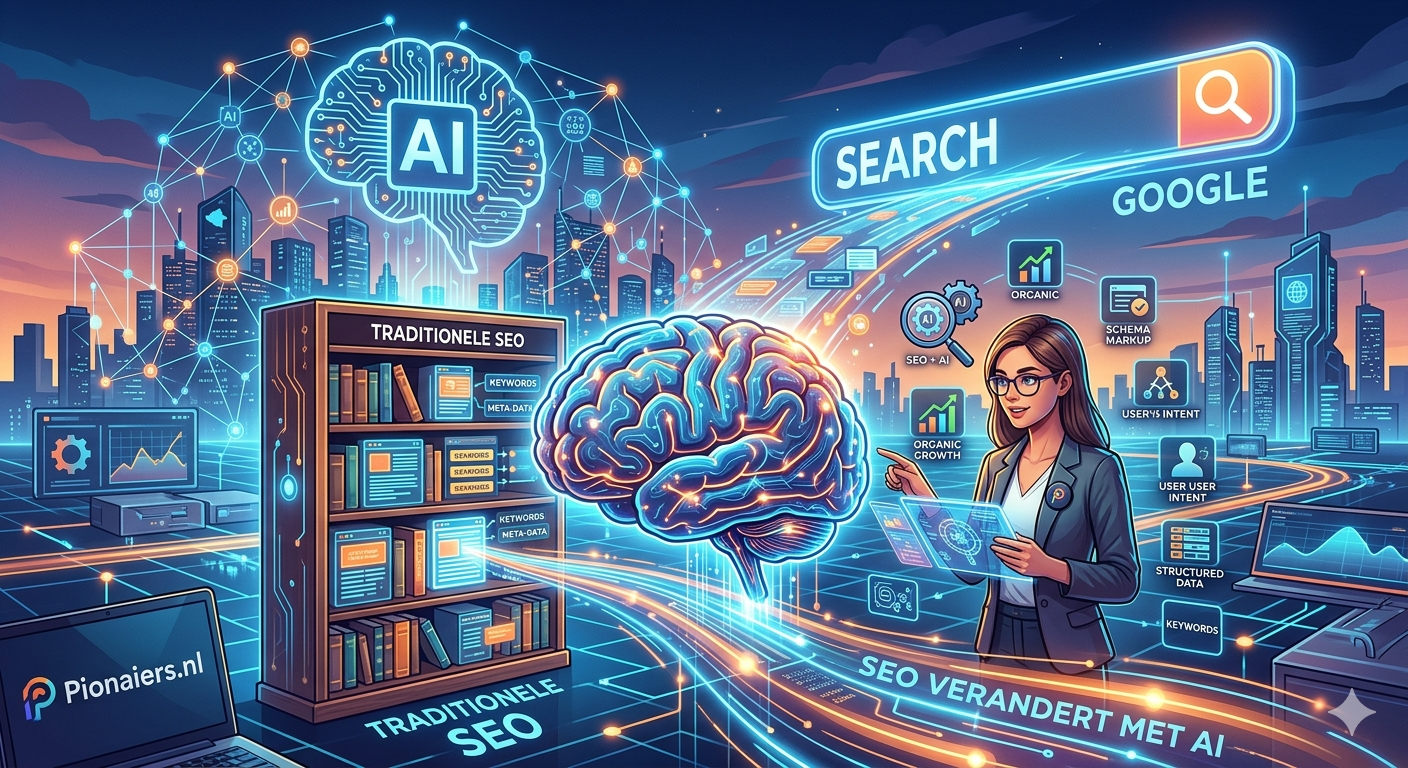
For years, content strategy revolved around finding the right keywords. Marketers built pages around keywords, optimized for volume and competition, and relied on tools like SEMrush or Ahrefs to map the playing field. But the rise of generative AI changes everything. People no longer just enter search queries into Google; they ask complete questions to systems like ChatGPT or Google AI Overviews. And these systems increasingly provide direct answers. No clicks, no links, no SEO as we knew it. This also means something for your content. If you want to be chosen by AI, you should not optimize for keywords, but for questions. You need to think like a user and like a language model. In this article, we explain how this shift works, what approach you need, and how to build content that AI understands, trusts, and chooses.
From keywords to intent
SEO was always based on a technical game around keywords: how often does someone search for ‘best air fryer’, what is the competition for that keyword, and how does my page score on it? But AI models like ChatGPT work fundamentally differently. They are not built to match keywords, but to understand intent. A language model answers questions based on context, meaning, entities, and reliability. It looks at which information logically fits the question and chooses the most relevant answer. So, those who want to be visible in the AI era must base their
Questions as the foundation of your content clusters
A modern content strategy does not start with a keyword list, but with a question cluster. What questions do people in your market ask? What do they really want to know when they are looking for a solution? Consider:
- What is the best VPN for freelancers?
- How does AI work in the financial sector?
- What is the difference between brand X and brand Y?
- Which CRM suits a fast-growing startup?
The answer to such questions is exactly what AI is looking for. If you answer these questions clearly, structured, and reliably, you increase the chance that your content will be selected as the answer.
How do you find the right questions?
In the Netherlands, you can surprisingly find many relevant user questions if you know where to look. Most traditional keyword tools fall short in the AI era because they are mainly focused on search volumes, not intent. Fortunately, there are more and more sources that can help you uncover the real questions that exist in your market. A handy starting point is the ‘People also ask’ section in Google. Search for a term that is important to your business, and you will immediately see which follow-up question Google shows. If you click on one question, new sub-questions automatically appear. This dynamic structure is based on common search patterns of Dutch users and is therefore a direct source of inspiration. Additionally, there are tools like AnswerThePublic or AlsoAsked that you can set to the Dutch language and location. These tools collect data from Google Suggest and the ‘People Also Ask’ results and create clear maps or tree structures from it. It is an effective way to bring dozens of relevant questions around one topic to the surface without having to search endlessly yourself. But you can also start closer to home. Look at your own customer data. What questions are often asked to your customer service or sales department? What comes back in emails, reviews, or chats? These are often exactly the questions that people really struggle with and that AI is also fed with via forums, review sites, or user-generated content.
Finally: use AI itself as a research partner. For example, ask ChatGPT:
“What questions do people in the Netherlands ask about [topic]?”
Or:
“What are common doubts when choosing a [product type]?”
You will see that in a few minutes you have a valuable list of questions on which your content strategy can directly build.
Write as an answer, not as a marketer
Content that works for AI is different from the average blog full of marketing language. ChatGPT chooses content that is clear, substantive, and well-structured. No empty claims, no buzzwords, but real answers. That means: a clear structure, subheadings, lists, concrete examples, source references, and a neutral, informative tone. Compare it to how you would explain something to a colleague. You want to be complete, but also clear. Relevance, reliability, and scanability are more important than persuasiveness. AI is more likely to choose the source that explains the question well than the one that shouts the loudest that they are the best.
Work with formats that AI recognizes
AI models love structure. The more consistent and recognizable your format, the easier it is for a language model to incorporate your content into an answer. Therefore, it pays to build content in recognizable forms such as:
- FAQs with one question and one clear answer
- How-to’s with concrete steps
- Product comparisons with pros and cons
- Guides that explain a topic from A to Z
- Lists with recommendations per situation or target group
By incorporating these types of formats into your strategy, you help AI recognize your content as a reliable answer. Bonus: it also helps your readers.
From measurability to AI visibility
Where SEO was always measurable in rankings and click data, AI visibility requires different indicators. You want to know: does my brand or product appear in the answers of ChatGPT or Google AI Overviews? Am I mentioned in questions that are relevant in my domain? That means you need to start testing your own prompts. Ask ChatGPT questions yourself and see who is mentioned. Or have a baseline measurement performed that gives you insight into how visible your brand is compared to competitors. These types of analyses become the new starting point for content optimization.
Conclusion: creating content that gets chosen
The shift from keywords to questions requires more than a few small adjustments. It means that as a brand, you need to learn to think from the user’s perspective and from the workings of AI. What are the real questions? How can you provide the best answer? And how do you structure it so that a language model understands, trusts, and promotes it?
Brands that make this shift are not only building findability but also authority. And that is exactly what is needed to be chosen in the AI era.Do you want to know what questions are playing in your domain, and whether your brand is already in the answer? With our AI Readiness Scan you get a crystal-clear insight into that.